
Septic systems
Septic cost-share
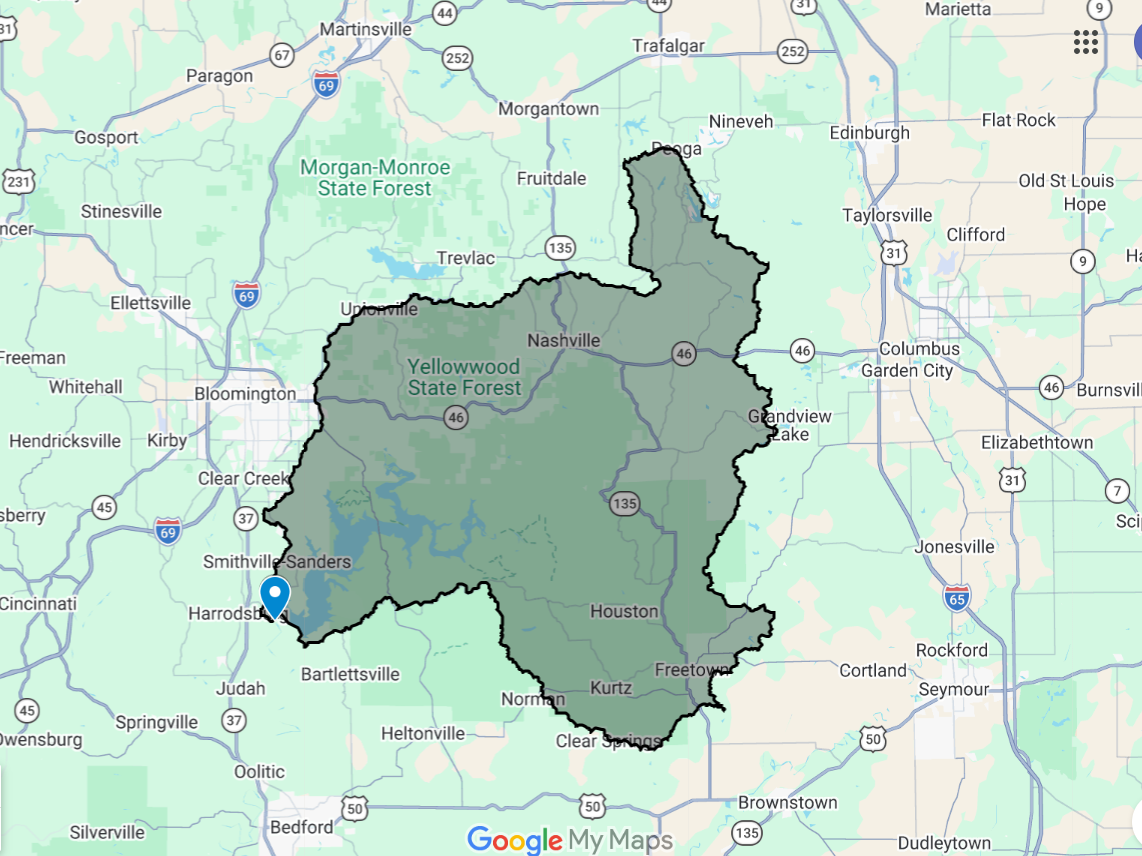
Thanks to 319 grant funding from the Indiana Department of Environmental Management, Friends of Lake Monroe has launched a septic system maintenance cost-share program to help offset the cost of septic tank pumping, septic tank riser installation, and select septic system repairs. Applicants must be located in the Lake Monroe watershed which spans portions of Monroe County, Brown County, and Jackson County. (Visit our interactive watershed map to see if your property qualifies.)
Apply for the program by filling out this Google Form:
*** https://forms.gle/4wzyxk1YniHZQEvr5 ***
Please DO NOT schedule pumping or repairs until you have received confirmation of approval. We can not offer reimbursements for work done before your application is approved. If you have questions, please contact watershed coordinator Maggie Sullivan at 812-558-0217 or watershed@friendsoflakemonroe.org.
Pumping your septic tank every 3-5 years helps ensure it is working properly. Save money, keep your system healthy, and keep our lake clean!

Failing septic systems are one source of bacteria and nutrient pollution in the creeks and streams feeding Lake Monroe.
You can help by making sure your system is properly maintained.
Pump your septic tank every 3 years. This provides an opportunity for inspection, takes care of the solids that gradually accumulate in the tank, and gives your septic field a short rest. In our region, septic tank pumping is typically between $150-$250. Prices vary depending on how accessible the tank is, the condition of the tank, and how far the pumper has to travel to dispose of the contents at a wastewater treatment plant.
Make your tank accessible with a septic system riser. This concrete or plastic pipe connects to the pump-out opening of your septic tank and extends to ground level. Septic tank risers have lids that anyone can remove to easily inspect or pump your septic tank without digging up your yard. It also provides a permanent reminder of where your septic tank is located.
Think at the sink. The best way to keep your septic system working for as long as possible is to minimize what you put down the drain. Limit use of your garbage disposal and avoid pouring fats, grease, solids, and harsh chemicals down the drain.
Don’t overload your commode. Make sure no wipes, sanitary napkins, tampons, or other trash goes down your toilet. Even if it says “flushable,” keep it out of your septic system. Stick with the 3 P’s – pee, poop, and [toilet] paper.
Don’t strain your drain. Try to stagger your use of water-heavy activities like laundry, showers, and running the dishwasher.
Shield your field. Do you know where your drain field is? (See diagram below.) Keep your vehicles off it and avoid planting trees there.


LEARN MORE
Download our Septic Maintenance Brochure. (click here).
Clear Choices Clean Water has great information about caring for your septic system and why this is such an important issue in Indiana. (click here).
The U.S. Environmental Protection Agency has a great program called “Septic Smart” with resources such as flyers to post in your rental property, detailed explanations of septic system operation, and guidance on what to do if your septic system fails. (click here).
whY WOULD I INSTALL A SEPTIC TANK RISER?
Septic tank risers are concrete or plastic pipes that connect the lid to your buried septic tank to a lid at ground level. (See diagram below.) While most modern systems include at least one riser for easy access, many older tanks do not. Adding a riser makes it easier and cheaper to get your septic tank pumped and inspected. It also serves as a visual reminder of your system. making it easy to find and reminding you not to park vehicles or plant trees on your septic field. See our maintenance tips below for more suggestions on how to protect your system.
Septic Tank Diagram from Purdue University Extension Publication HENV-5-W “Septic Tanks: The Primary Treatment Device of Your Septic System”

-
Friends of Lake Monroe has offered 50% off septic tank pumping for watershed residents through three different programs.
In July 2025 we launched a program in Jackson County with funding from the Raymond Foundation. This program was expanded into Brown County in November and the last vouchers were distributed in March 2026.
In June 2024 we launched a program in Monroe County with funding from the Monroe County Stormwater Board. This program ended in late 2024.
In March 2022 we launched a program in Monroe County with funding from the Community Foundation of Bloomington-Monroe County. This program ended in August 2022.
All three programs provided reimbursement to help offset the cost of septic tank pumping or installing a septic tank riser. Eligible households were reimbursed for half the cost of one or both services, with a household limit of $100 for one service or $150 for both.
To be eligible for cost-share, the properties had to be located in the target county and in the Lake Monroe Watershed.
Residents could submit an application online using a Google form or they could call and apply by phone.
Vouchers were issued on a first-come, first-served basis by the application date.
Vouchers had an expiration date of 60 days after the issuance date. Extensions were available on request.
It was the homeowner’s responsibility to hire a septic system contractor or company to pump the septic system or install a septic system riser. A list of approved companies and contractors is available on the Monroe County Health Department website (click here and scroll to the bottom of the page).
Applicants were responsible for all upfront costs. It was the applicant’s responsibility to negotiate any delay in payment with their contractor/company.
Applicants had to submit their voucher and receipt to Friends of Lake Monroe for reimbursement. Submissions could be done by postal mail or e-mail.
Homeowners received a completion letter and payment approximately 10 days after submitting their documents.
-
Septic systems consist of a septic tank and a drain field (also known as a septic field). Wastewater from sinks, toilets, dishwashers, and washing machines flows into your septic tank. Bacteria in the tank digest the organic matter in the wastewater, providing the first level of treatment. There are baffles in the tank that direct solids to the bottom and grease the top. This allows the middle liquid portion to flow into the drain field. The drain field consists of narrow perforated “finger” pipes where the water slowly trickles out. Bacteria in the gravel and soil around the pipes provide additional treatment as the water flows through and down into the ground. Septic systems are a way to treat wastewater on-site instead of sending it through a system of pipes to a wastewater treatment plant.
-
Check your property records to see if a septic system map was included with your home documents when you purchased the property. Another way to tell is to check your utility bill. If you are on a sewer system, you should be receiving a monthly bill for sewer service. This might be a standalone bill or it might be combined with your water bill. If you are not paying for sewer service, you probably have a septic system somewhere on your property
-
Review your property records to see if you have a map of your septic system. If not, contact your county health department and ask them to pull your file. For newer homes, there should be a map of your septic system on file. For older homes, there may not be documentation available. You may need to hire a septic system professional to locate your tank. Once you locate your septic tank, mark the exact spot so you can find it again. Even better, install a permanent septic tank riser.
-
Septic tank risers are concrete or plastic pipes that connect to the pump-out opening of your septic tank and extend to ground level. Septic tank risers have lids that anyone can remove to easily inspect or pump your septic tank without digging up your yard. It also provides a permanent reminder of where your septic tank is located.
-
Drain fields are typically located adjacent to septic tanks. They may have visibly greener or taller grass, particularly during dry periods. If no map of your septic system is available, a septic system professional can locate your drain field. Once you locate your drain field, record or mark the location so you can find it again. It is important to protect the drain field and the pipes it contains. Never drive over or park on the drain field as it can crush the pipes. Avoid planting trees as their roots can clog the pipes. Divert rainwater away from the drain field so it doesn’t become flooded
-
Your county health department should have a list of licensed septic contractors. Often they maintain two lists: Septic system pumpers and haulers (who can clean and inspect your septic tank) and Septic system installers (who can install and repair septic systems )
For Jackson County, click here and scroll to the “Septic” section.
For Monroe County, click here and scroll to the “pumpers and haulers” link.
For Brown County, click here for a septic contractor list.